Stop Buying Vacation Clothes You Never Wear: A Smarter Way to Build Your Resort Wardrobe

Photo: woman organizing colorful vacation clothes in open suitcase on bed, via image.cdn2.seaart.me
Somewhere in your closet, there's probably a sarong. Maybe a pair of linen pants you bought for a Cancún trip two years ago and haven't touched since. Possibly a flowy sundress that seemed perfect in the store but felt completely wrong the moment you arrived somewhere that was, it turned out, not a sundress kind of place.
You're not alone. The vacation clothing cycle is one of fashion's most reliable traps: anticipation drives impulse purchases, the trip happens, the clothes come home barely worn, and the whole thing repeats before the next getaway. The result is a resort wardrobe that's crowded but never quite right — full of things that don't actually match how or where you travel.
The fix isn't buying more. It's buying smarter. And that starts with understanding your actual travel identity.
Step One: Audit What You Already Own (Honestly)
Before you add anything new to your wardrobe, pull out everything you consider a vacation piece and lay it out. This is your audit. Ask yourself three questions about each item:
Did I wear it on the last trip it was packed for? If it came home folded the same way it was packed, that's data.
Does it fit the climate I actually travel to most? A breezy cover-up that's perfect for the Gulf Coast is useless for a Colorado mountain summer or a Pacific Northwest lake trip.
Does it work with at least three other things I own? Standalone pieces — the ones that need a specific outfit built around them — are the first to get skipped when you're actually packing.
Anything that fails two or more of these questions is taking up space it hasn't earned. Set it aside. You can donate it, sell it, or repurpose it — but it shouldn't be in the pile you're building from.
Step Two: Get Clear on Where You Actually Vacation
This is the part most people skip, and it's the reason the cycle keeps repeating. We shop for the vacation we imagine — a dreamy Caribbean escape with turquoise water and endless beach days — and then spend most of our actual vacations somewhere that calls for something different.
Take a few minutes to think honestly about your last three to five trips. Where did you go? What were you actually doing each day? What did you wish you'd packed?
Here's a quick self-assessment to help you find your travel type:
The Beach & Island Traveler — You're in Florida, Hawaii, the Caribbean, or somewhere along the Gulf Coast. You're spending real time in the water, at beach bars, on boat excursions. You need swimwear that works hard, cover-ups that transition quickly, and lightweight pieces that handle humidity without complaint. Fabrics: cotton gauze, linen, quick-dry blends. Avoid: anything that wrinkles catastrophically or requires ironing.
The Desert & Spa Retreater — Think Scottsdale, Santa Fe, Palm Springs, or Sedona. The heat is dry rather than humid, evenings cool down dramatically, and the aesthetic leans toward earthy, relaxed luxury. You need layers more than you'd expect, and breathable fabrics in warm neutrals and terracotta tones feel completely at home. Fabrics: linen, modal, lightweight jersey. Avoid: anything too beachy — it'll feel out of place in a high-desert setting.
The Lakeside & Mountain Casual Traveler — Cabin rentals, lake houses, national park basecamp trips. The vibe is outdoorsy but you still want to look like yourself. Mornings can be cool, afternoons warm. You need versatile layers, durable casual pieces, and footwear that can handle both a dock and a dirt trail. Fabrics: brushed cotton, soft denim, performance-blended tees. Avoid: anything too precious to sit on a dock or get splashed.
The City-with-a-Resort-Side Traveler — Miami, New Orleans, Charleston, San Diego. You're mixing sightseeing, restaurants, beach time, and nightlife. Your wardrobe needs genuine range — pieces that dress up and down fluidly without requiring a full outfit change. Fabrics: cotton-linen blends, ponte, lightweight rayon. Avoid: anything that reads as purely beach — you'll feel underdressed the moment you step into a restaurant.
Step Three: Build Around a Core Palette, Not Trends
One of the fastest ways to break the cycle of unworn vacation clothes is to stop shopping by trend and start shopping by palette. When everything in your resort wardrobe works with everything else, you multiply your outfit options without multiplying the number of pieces you own.
Choose two to three neutrals that feel like you — sand, white, navy, warm taupe, olive — and build from there. Add one or two accent colors or prints that genuinely excite you, but make sure they play nicely with your base. A printed wrap skirt that works with three different tops is a great investment. A printed wrap skirt that only works with one specific tank you already own is a trap.
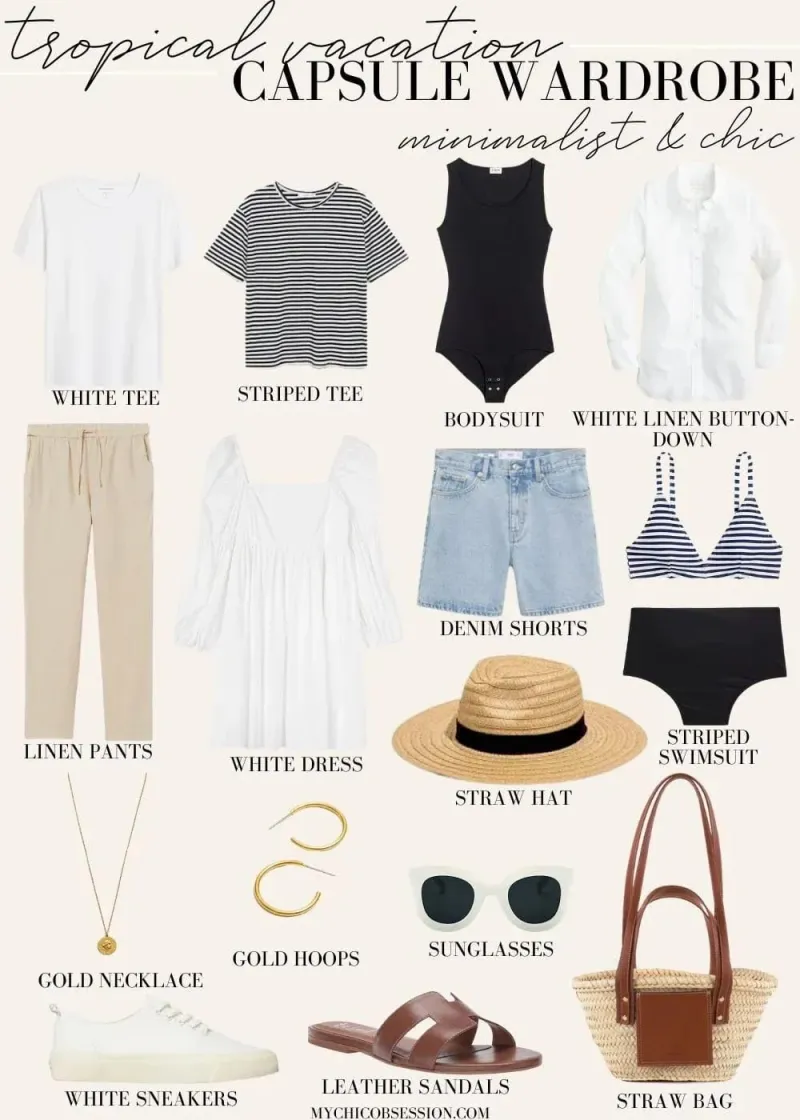
For most travel types, a working core wardrobe of eight to twelve resort pieces is genuinely sufficient for a week-long trip. That's two or three swimsuit options, a few versatile tops, two bottoms, one or two dresses or jumpsuits, and a layer or two. The pieces should be doing real work — not just sitting in the suitcase waiting for an occasion that never comes.
Step Four: Apply the Fabric-to-Climate Rule Before You Buy Anything
Every purchase decision for your resort wardrobe should pass one filter: does this fabric make sense for the climate I'm dressing for?
Humid coastal heat calls for natural fibers that breathe and release moisture — linen, cotton, and cotton gauze are your best allies. Dry heat needs breathable fabrics too, but with a little more structure since the air isn't as forgiving of completely shapeless silhouettes. Cooler mountain and lake settings reward layering pieces made from slightly heavier, more substantial fabrics that hold warmth when the sun drops.
If you're buying online — which most of us are — read the fabric content before anything else. A beautiful dress in a polyester blend might look perfect in photos, but if you're heading somewhere hot and humid, you'll know within twenty minutes of wearing it that it was the wrong call.
Step Five: Give Every Piece a Job Before It Gets a Spot
The final step in rebuilding your resort wardrobe is the most important habit to maintain going forward. Before anything new earns a place in your vacation rotation, give it a job description.
What specific trip or climate is it for? What three other pieces does it work with? What's the situation it's solving — beach day, dinner out, long travel day, active excursion?
If you can't answer those questions clearly, the piece isn't ready to come home with you yet. This isn't about being restrictive — it's about being deliberate. The goal is a vacation wardrobe that feels like relief when you open your suitcase, not a puzzle you're trying to solve at the last minute.
The best resort wardrobe isn't the biggest one. It's the one that actually travels with you — wherever you actually go.